


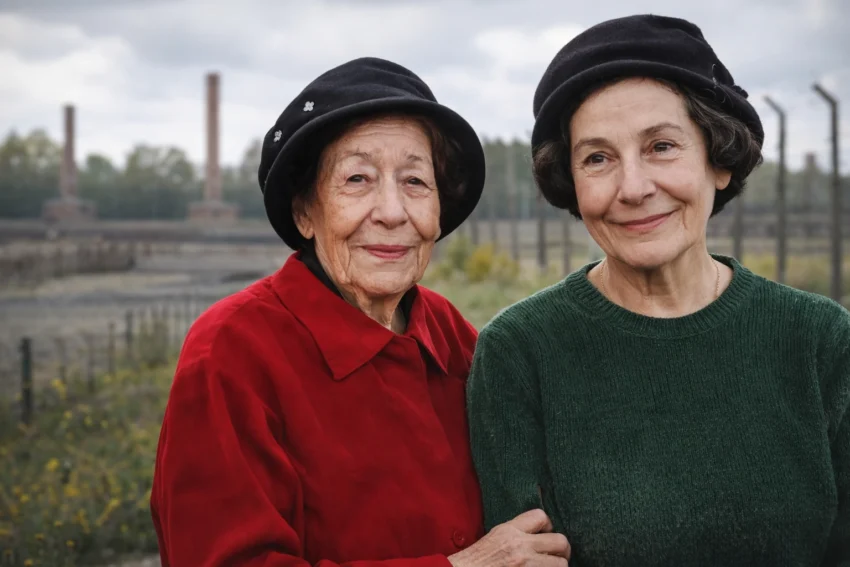
Gabi Goslar was born on October 25, 1940, in Amsterdam. Her full name is Rachel Gabriele Ida Goslar, but she is widely known as Gabi Goslar. She grew up in a Jewish family that had fled from Germany before the Holocaust. From a very young age, she witnessed the horrors of Nazi persecution and the challenges of living as a Jewish child in occupied Netherlands. Her life story is intertwined with her family’s tragic experiences during World War II.
Gabi is the younger sister of Hannah (Hanneli) Pick-Goslar, a close childhood friend of Anne Frank. Through this connection, Gabi has an indirect link to Anne Frank’s story. Her life represents the struggle, resilience, and hope of children during the Holocaust, showing how families survived extreme hardship together.
| Attribute | Information |
|---|---|
| Full Name | Rachel Gabriele Ida Goslar |
| Date & Place of Birth | October 25, 1940, Amsterdam |
| Family | Sister: Hannah Pick-Goslar |
| Known For | Holocaust survivor, connection to Anne Frank |
| Nationality | Dutch |
Early Life of Gabi Goslar – Childhood in Amsterdam
Gabi grew up in a loving family in Amsterdam. Her parents tried to give the children a normal upbringing despite the growing threat of war. She shared a close bond with her older sister Hannah, who was a constant source of comfort during difficult times. The family emphasized their German-Jewish heritage and traditions, hoping to pass them down even in uncertain times.
From an early age, Gabi was aware of the dangers surrounding Jewish families. Anti-Jewish measures were intensifying, and life was full of fear and restrictions. This early awareness shaped her resilience and her understanding of the importance of family, survival, and hope.
| Topic | Details |
|---|---|
| Parents | Jewish family originally from Germany |
| Siblings | Older sister Hannah |
| Childhood Experience | Early awareness of danger, loving family |
| City | Amsterdam |
The Goslar Family and the Nazis – Arrest and Deportation
In 1943, the situation worsened for Jewish families in the Netherlands. The Goslars were arrested by the Nazis and sent to Westerbork transit camp, where they awaited deportation to concentration camps. Gabi, still a small child, directly experienced the fear and brutality of Nazi persecution.
Soon after, the family was sent to Bergen-Belsen, one of the most notorious concentration camps. Life there was harsh: hunger, disease, and constant fear dominated every day. Many families were torn apart, and the Goslars faced unimaginable hardship. These experiences strengthened Gabi’s survival instincts and determination to live.
Gabi Goslar and Anne Frank – Their Special Connection
Gabi herself was not a close friend of Anne Frank, but her sister Hannah was a childhood companion of Anne. Through this family connection, Gabi was indirectly part of Anne Frank’s world. In Bergen-Belsen, there were brief encounters between the families, highlighting both the tragedy and the human connection in the camps.
One of the most famous moments was the sisters speaking with Anne Frank through barbed wire between camp sections. These moments demonstrated that even in the darkest circumstances, bonds of friendship and humanity could endure. For Gabi, these experiences shaped her understanding of loss, hope, and the strength of human relationships.
Survival and Liberation – Gabi Goslar’s Story
Gabi survived Bergen-Belsen with the support of her family and fellow inmates. Liberation came in April 1945, ending the immediate threat of death, but the emotional and physical scars remained.
After the camp’s liberation, she had to rebuild her life from scratch. Losing family members and friends left lasting pain, but she learned to cope and gradually find hope. Surviving such extreme conditions gave Gabi a unique perspective on freedom, resilience, and the importance of human dignity.
Post-War Life of Gabi Goslar – Starting Over After the Holocaust
After the war, Gabi returned to Amsterdam with her sister Hannah. They attempted to reconstruct their lives, carrying the memories of those lost and the trauma of the Holocaust. Gabi eventually emigrated to Israel, where she built a quiet and stable life while processing her experiences.
Though not a public figure, Gabi remained a witness to history. Through her sister Hannah and her family’s connections to Anne Frank, her story continues to resonate as a testament to courage, survival, and hope after extreme suffering.
Legacy of Gabi Goslar – Why Her Story Matters
Gabi Goslar represents the thousands of children who survived the Holocaust. Her story shows how family bonds, solidarity, and courage were essential for survival in one of history’s darkest periods.
Her connection to Anne Frank’s story ensures that her experiences remain part of Holocaust education and remembrance. Gabi’s life teaches the importance of remembering the past, honoring those who suffered, and ensuring that such atrocities are never repeated.
FAQ – Frequently Asked Questions About Gabi Goslar (100 words)
- Was Gabi Goslar a friend of Anne Frank?
No, but her sister Hannah was a close friend of Anne. - How did Gabi survive the Holocaust?
She survived thanks to her family and the support of fellow inmates in Bergen-Belsen. - Did Gabi see Anne Frank in the camp?
Yes, they had brief encounters through the barbed wire at Bergen-Belsen. - Where did Gabi live after the war?
She initially returned to Amsterdam and later moved to Israel. - Why is Gabi Goslar important?
Her story demonstrates courage, survival, and the human impact of the Holocaust.
Read more : MyWirelessCoupons Garden — How to Save Smartly and Easily